Your Information Now



USE THE CATEGORIES IN THE BLACK BAR ABOVE, OR YOUR MENU ICON OF YOUR DEVICE TO NAVIGATE THE SITE TO FIND THE INFORMATION YOU ARE LOOKING FOR.
ROGUEWEATHER IS PRESENTED BY:

FISHING INFORMATION FOR SOUTHWESTERN OREGON
BROUGHT TO YOU BY;

Dive into the serene world of fishing with the Black Bird's extensive collection of fishing gear. Whether you're an avid angler or just starting, they cater to every experience level. They carry everything from high-performance rods and reels to essential tackle and accessories, carefully selected to enhance your fishing experience. Embrace the calm of the waters and the thrill of the catch with quality gear for every experience level. At the Black Bird, they're committed to equipping you for memorable moments.
If your fishing trip leaves you with a hook where it should not be........it's Valley Immediate Care to the rescue!







Lake and Pond Reports presented by;

Lake and Pond Report highlights for Southern Oregon;
Lost Creek Reservoir has had great reports by folks trolling for rainbow trout.
Perch are great eating fish. They are also very easy to catch using a bobber and worm. The fillets are perfect for fish tacos. In Oregon they are invasive. That means you can keep all of them you want with no limit.
Trout stocking
Check out the ODFW fishing and trout stocking maps to find nearby fishing locations, driving directions and descriptions of amenities.
FEATURED REPORTS: -
APPLEGATE RESERVOIR: trout, spring chinook, largemouth bass, smallmouth bass, bluegill, crappie
Brought you by:

The lake level is 1,914 ft and the surface temperature at Applegate is 47F. Check up-to-date reservoir levels here, or call the Army Corps of Engineers at (800) 472-2434 for lake level and temperature information. The low-water ramp at French Gulch is the only available ramp at these levels. No recent reports regarding how good the fishing is. Typically trout fishing is good at this time of the year. Especially in the arms. Bass fishing can be good on sunny afternoons where rocks are primary structure. The dam, and the footings of the Carberry Creek Bridge are good areas to target.
There is a longstanding health advisory for consumption of resident species due to elevated levels of mercury. See Oregon Health Authority consumption guidelines or the sportfishing regulations for more information.
DIAMOND LAKE: rainbow trout, tiger trout, brown trout
DO NOT EVER USE LIVE BAIT IN DIAMOND LAKE!! IT IS AGAINST THE LAW AND IT DOES NOT WORK ANY WAY. IF YOU SEE PEOPLE USING LIVE BAIT IN DIAMOND LAKE, REPORT THEM IMMEDIATELY.
IF YOU DO NOT KNOW THE REGULATIONS REGARDING RELEASE OF BROWN AND TIGER TROUT IN DIAMOND LAKE.....YOU NEED TO READ THE INFORMATION BELOW!!
Diamond Lake has a live cam to show the conditions at the lake. To see that webcam, click here
The north boat ramp is open. No dock in the water. All other boat ramps are closed. Fishing has been good. Mostly due to warmer water. That leads to hungrier fish. Anglers can check fishing and water conditions at Diamond Lake on the Diamond Lake Resort Facebook page, or call 541-793-3333 for updates. Diamond Lake is open year-round.
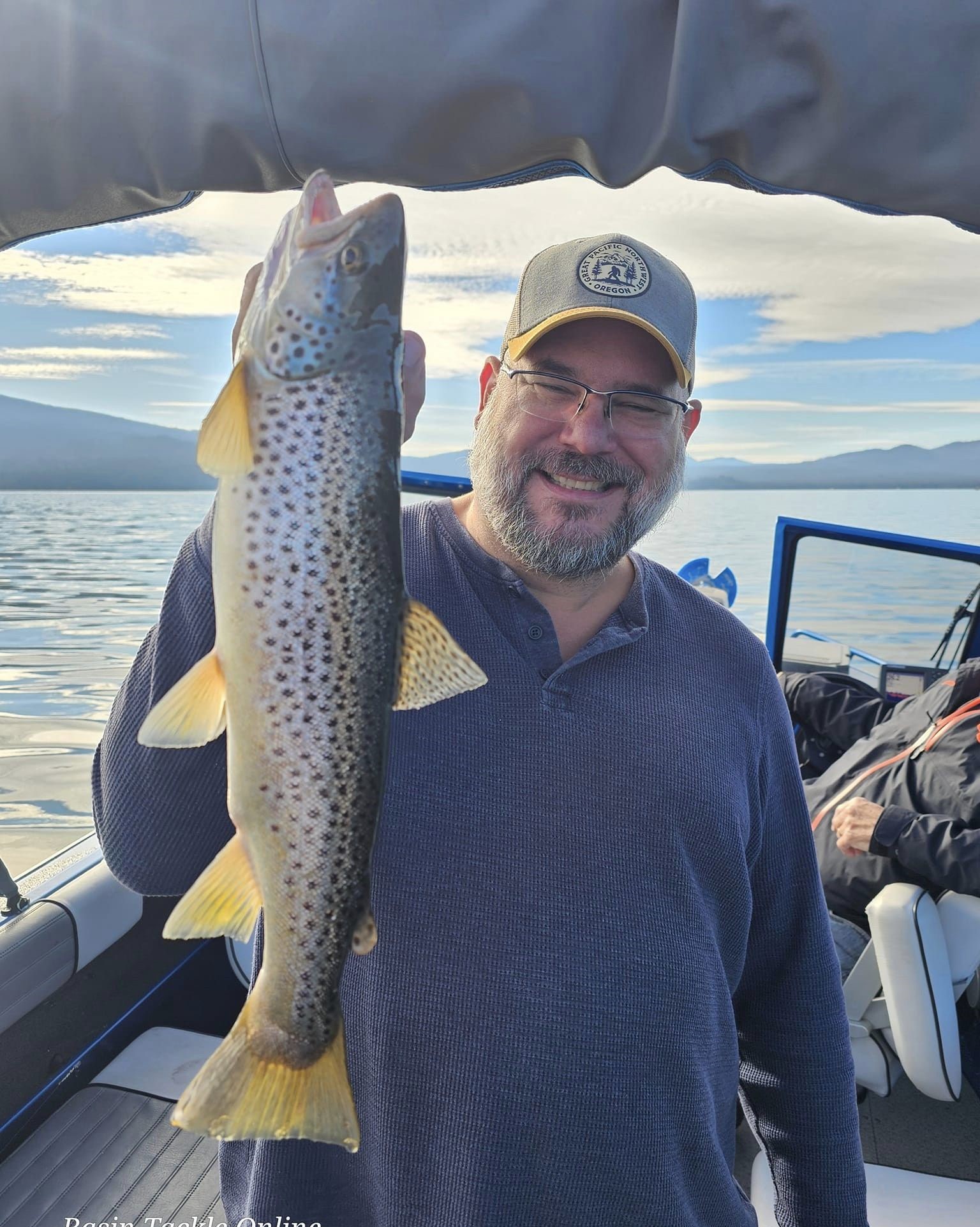
Diamond Lake has been stocked with tiger and brown trout. These fish are intended to assist in controlling illegally introduced tui chub. These trout are catch-and-release only and need to be released immediately and unharmed if caught. Do not do what you see below. That can kill them when you hold them like that. Especially by the gill plates as shown. Click here to see the guidelines. Click here to see a video demonstrating how to do it.
FISH LAKE: rainbow trout, brook trout, spring Chinook
Fish Lake is 64 percent full and ice-free. It's fairly unusual to have open water available in February. The resort has been reporting very good results for those fishing on their facebook page. Results may vary, but.....fishing does appear to be much better than would be typical to the time of the year. The lake not icing over likely has a great deal to do with that. Warmer water. Hungrier fish.
Tiger trout should be immediately released unharmed. Anglers are encouraged to report their catch or any other fish stories to Rogue Fish District Staff 541-826-8774.
HOWARD PRAIRIE RESERVOIR: trout, bass, pumpkinseed sunfish, bluegill
Brougfht to you by

Howard Prairie is 77 percent full and mostly open water. The gravel boat ramp by the dam is the only ramp available until County Parks open. There are no recent reports about angler success. But, as the lake never iced over, the trout should be on a good bite. Especially mid days and in the afternoons.
Remember to remove all vegetation from gear, boots and boats before leaving Howard Prairie.
Jackson County park campgrounds are open. Click on the blue highlighted to make reservations.
HYATT LAKE: largemouth bass, smallmouth bass, rainbow trout
Brought to you by;
Hyatt is 76 percent full. The lake is mostly ice-free. Fishing power bait a couple feet off the bottom near the dam is typically a good early season strategy.
Remember to remove all vegetation from gear, boots and boats before leaving Hyatt.
LAKE SELMAC: trout, largemouth bass, bluegill, crappie, bullheads
There were 5,000 legal-size rainbow trout stocked at Selmac a few weeks ago. The lake level is likely to rise with rain and snowmelt, so boats should be easier to launch now.
Lake Selmac has its share of non-native aquatic hitchhikers. Boat anglers please do your part to remove as much vegetation as possible before leaving the ramp, as well as drain and dry their vessel before boating in another waterbody. Please help stop the spread of Oregon's aquatic hitchhikers!
Lake Selmac facilities including most campgrounds, day use, and boat ramps are operated by Josephine County Parks are currently open. More information about Josephine County Parks can be found on their website.
LOST CREEK RESERVOIR: rainbow trout, brown trout, spring chinook, bass, bullheads
Brought to you by

ROGUEWEATHER'S PICK SPOT THIS WEEK! The lake level is 1,824ft and the water surface temperature at Lost Creek is 47F. Early morning ice may be an issue on the Takelma ramp depending on the day, but boats are getting out and enjoying the trolling. Lost Creek also offers good bank fishing access, and fishing on both sides of the lake near the dam can be very effective using PowerBait. Boat anglers do seem to be outdoing bank anglers in the success department. Trolling is already working very well.
Joseph Stuart Recreation Area is a Jackson County Park. If you’re a frequent user of day use facilities here, a Jackson County Parks season pass is $40 and covers many other local Rogue Valley fishing destinations, as well. More information can be found on the Jackson County Parks website.
WILLOW LAKE: rainbow trout, largemouth bass, black crappie, bluegills, brown bullhead, perch:
Willow Lake is about 4,945acft which is about half full. Full pool is about 8,500acft. To check the current lake level click here.
Boat ramps are currently closed for the season, but bank angling is still available. And, fishing for trout should be good from late morning through the afternoon. Especially on sunny days. Use worms, and you can also get perch.
Anglers catching illegally introduced yellow perch are always encouraged to take as many of these as they want. This illegal introduction has only resulted in stunted perch and negative impacts to the bass and trout fishery in this lake and numerous others around the area. Anglers are reminded that using live fish as bait is prohibited. If you see someone transporting live fish from or into a waterbody, please get a photo and/or call OSP with this information.
For more information on camping and day use please visit the Jackson County Parks website or call 541-774-8183.

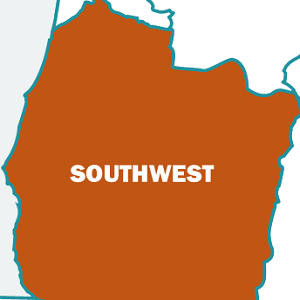
For a complete look at Southwestern Oregon fishing reports, click the image below;
For a complete look at Southeastern Oregon fishing reports....including Lake of the Woods, and all of Klamath and Lake Counties, click the image below;

For detailed Central Oregon fishing information, click the banner

For General Recreation,,,,,,,,,,,,,,,,,,,click image 
RIVER FISHING REPORTS
Reports brought to you by:

River Report Roundup -
Rogue South Coast Winter Steelhead Validation is required to target steelhead starting December 1. A Wild Steelhead Harvest Tag is also required to harvest non-adipose clipped (wild) steelhead where open. See page 35-39 in the Oregon Sport Fishing Regulations.
Rogue River, lower: salmon, steelhead, trout
Brought to you by;

River conditions are high this week from recent rains. Conditions should begin to shape up as the water drops later this week. Anglers are catching a mix of hatchery and wild steelhead. Remember to purchase Rogue South Coast Steelhead Validation prior to going steelhead fishing.
Anglers that see a game violation can report the violation to *OSP (*677) on a mobile device or call 1-800-452-7888. Anglers can also file complaints or potential violations concerning guides to the Oregon State Marine Board.
For a current view of the Rogue from the Isaac Lee Patterson Bridge in Gold Beach, check out the ODOT’s camera.
Rogue River, middle: steelhead, chinook salmon, trout

The middle Rogue is high and muddy after rain and snowmelt this week. The river should be dropping slowly into the weekend but will still be high. Try fishing plugs or larger lures near the heads and tails of pools in travel lanes. Migrating fish will be relatively close to the shore in these high conditions.
Anglers, please use proper catch-and-release techniques, such as keeping fish in the water as much as possible and releasing them quickly. If fish are getting injured with the technique you are using, please change techniques. Remember that smaller rainbow are usually the steelhead that will return in future years.
Current flow, temp and turbidity conditions for the Rogue can be found at the USGS stream gauges here, or checking the City of Grants Pass water page's river data here.
It is illegal to snag and keep a snagged fish, whether it’s wild or hatchery! Report violations to Oregon State Police by calling *OSP.
Rogue River, upper: steelhead, trout

The release from Lost Creek Reservoir is around 1,350cfs and 43F. Click here for current flow at the Ray Gold gage. The only relatively clear water will be upstream of Big Butte Creek until the river drops after the rain and snowmelt this week.
Cole Rivers Hatchery returns as of 2/24/26: New summer steelhead 4, season total 2,136. New winter steelhead 2, season total 4. Try fishing larger lures or plugs in travel lanes near the heads and tailouts of pools. Fish will be migrating relatively close to the bank at these higher flows.
For up-to-date river levels, check all the USGS Rogue gauges here.
ROGUE RIVER ABOVE LOST CREEK RESERVOIR: rainbow trout, brown trout, and cutthroat trout. There are also brook trout. These have now been declared invasive. There are no restrictions at all on brook trout. You can keep all you want regardless of size.

Fishing is available all year above Lost Creek Lake but snow will likely limit access. Take a look at ODOT TripCheck before heading up. Anglers are encouraged to harvest brook trout regardless of size.
The Rogue and tributaries above Lost Creek Reservoir are open to fishing year-round, with a daily retention limit of 5 trout (no limit on brook trout). Anglers are encouraged to harvest brook trout regardless of size. The Upper Rogue and it's tributaries are stocked weekly between Memorial Day and Labor Day.
The south and middle forks of the Rogue are not stocked, are generally more difficult to access, and provide fishing opportunity away from crowds. Naturally produced rainbow and cutthroat trout are available, but anglers may choose to practice catch and release on the rainbow and cutthroat of these forks.
UMPQUA RIVER, MAINSTEM: steelhead, sturgeon, chinook, bass, striped bass, shad, trout
Winter steelhead are being caught throughout the mainstem. Angling is improving with the recent rains. The river is high now, so plunking will be your best bet as the water recedes. Only hatchery steelhead may be harvested.
Spring Chinook seasons were announced recently. The mainstem will be closed to all harvest of wild spring Chinook including jacks. Hatchery fish are still open and there should be a decent run again this year.
UMPQUA RIVER, SOUTH: steelhead, trout, smallmouth bass
The South Umpqua River is now open for winter steelhead. Reports of steelhead are being caught throughout the river. Several hatchery steelhead have been caught in the Canyonville area. Once river conditions start coming into shape, fishing should be good.
Stanton Park campground (near Canyonville) is under construction, and the old access is closed for the winter. A new access roadway through the main park entrance is available for anglers. It is steep and currently rocked, so 4-wheel drive is recommended. Please look at before driving down. Contact Douglas County Parks with questions.
CHETCO RIVER: Sea run cuttthroat trout, rainbow trout, chinook salmon, steelhead
Brought to you by:

Rain early this week caused high river conditions. Fishing conditions should shape up over the next few days and improve into the weekend for both boat and bank anglers. Anglers will find steelhead throughout the river. Anglers are reminded that all tributaries to the Chetco are closed to fishing.
Anglers should always check for updated regulations prior to fishing.
ELK / SIXES RIVERS: Sea run cutthroat trout, rainbow trout, steelhead
Rain improved conditions and the forecast is for small storm events for the next few weeks. Boat angling is the best, as there is very little public bank access.
Anglers should always check for updated regulations prior to fishing.
APPLEGATE RIVER: rainbow and cutthroat trout, steelhead
The Applegate River is open for hatchery trout and winter steelhead. All wild (unclipped) fish must be released. Rain and snowmelt brought flows up significantly. Water clarity should improve the closer you get to Applegate Dam and the angling deadline. Conditions should start to improve by the weekend. Until the river drops down again, try fishing heads and tails of pools or plunking in travel lanes.
The Applegate River is open for trout fishing. This is mainly a catch-and-release fishery for cutthroat. Anglers will find them hanging out in the deep pools spread throughout the river but they're more numerous upstream of the town of Applegate where the water is colder. Only adipose fin clipped rainbow trout may be retained. All wild rainbow and cutthroat trout must be released unharmed. Consult the fishing regulations for more information.
ILLINOIS RIVER: trout, steelhead
The Illinois River is open for trout and steelhead fishing using flies and lures only. Water levels have come up after the rain and snowmelt this week, but should start to drop by the weekend. Try fishing the heads and tails of pools until the water level flattens out and clears up. Use larger brighter lures if water is turbid. Click here for river flow and river forecasts. Consult the fishing regulations for more information and locations open to fishing. Tributaries, including East Fork and West Fork Illinois, are closed to angling.
Much of the publicly accessible reaches of the Illinois River fall under the USFS Wild Rivers Ranger District. More information can be found on their website. For up-to-date flows check the USGS Kerby gauge.
WINCHUCK RIVER: Sea run Cutthroat trout, rainbow trout, steelhead
Open for steelhead and trout fishing. No recent reports. Beaware of private property along this river. Anglers should always check for updated regulations prior to fishing.
MARINE FISHING REPORTS -
Brought to you by:

For detailed Brookings marine fishing information, click here
For detailed Winchester Bay marine fishing information, click here
BOTTOM FISHING
Brought to you by

A few reminders:
As of Jan. 1, 2026, an Ocean Endorsement is needed for most recreational anglers fishing in the ocean. Check the Ocean Endorsement page for more information.
Visit the sport bottomfish seasons page to see what's new for 2026.
Retention of quillback rockfish and yelloweye rockfish remains prohibited.
Cabezon is prohibited from January 1 through June 30.
Port by port reports:
Depoe Bay: Minimal effort was observed last week.
Newport: Anglers landed around 3 rockfish on average. Lingcod was good at around 1.5 fish per angler.
Charleston: No effort was observed last week.
Brookings: Minimal effort was observed last week.
The offshore long-leader fishery gives anglers an opportunity to catch more fish and to distribute effort away from nearshore species. Learn more about the gear and the fishery.
Bottomfish fishing resources:
- What can I keep and how many? Keep up with in-season regulation changes.
- Know what you've caught with some helpful rockfish identification tips (including online quizzes and video).
- Waypoints for fathom lines and other restricted areas.
Ocean salmon
The ocean recreational salmon fishing season is now closed. Season options for 2026 will be proposed in March.
2026 Ocean Salmon Pre-season Planning Meeting: The 2026 Ocean Salmon Industry Group Meeting is scheduled for Friday, February 27. This meeting will provide a review of the 2025 seasons, take a first look at the 2026 salmon forecasts, and begin the development of Oregon preferred recreational and commercial ocean salmon season concepts via public input to take forward through the Pacific Fishery Management Council regulation setting process. This meeting (with both in-person and virtual option) is open to the public and meeting details can be found here.
A guide to ocean salmon identification is available here.
CRAB AND OTHER SHELLFISH
Always check for closures at the ODA Shellfish Safety page before harvesting shellfish, which includes clams, crabs and mussels.
Announcements
Chinese mitten crab found in Willamette River
A second confirmed Chinese mitten crab, a prohibited species in Oregon, was found and reported to ODFW on November 17 in the Willamette River near Sellwood Bridge. The first mitten crab was caught on April 22 in the Lower Columbia River. Mitten crabs caused significant infrastructure and ecological damage in and around San Francisco Bay when the population was at its height in the late 1990s and it is illegal to possess and sell mitten crabs in Oregon. It is important to correctly identify this species and report it to the Oregon Invasive Species hotline online or by calling 1-866-INVADER or to your local ODFW office with the location found. ODFW encourages the public to keep an eye out for mitten crab. Read the news release for more information.
Prohibited line markings in effect
Recreational crabbers are not required to mark their line but are prohibited from using certain line markings that are required in other fisheries. To read more about why and what is prohibited, visit our Marine Life Entanglement page.
Bay clams
Always call the ODA shellfish safety hotline at 1-800-448-2474 or check the ODA shellfish closures website before harvesting for the most current information about shellfish safety closures.
Grab a shovel or rake and your shellfish license. Butter, cockle and gaper clams are waiting to be dug. During fall and winter, negative low tides suitable for clamming occur in the evenings. Monitor the weather forecast, and the swell and surf advisories before going out to make sure you can safely clam. Clammers should be mindful of safety while clamming at dark. Safety measures include not clamming in unfamiliar areas, bringing a reliable light source and avoiding clamming alone.
Check out the Where to Clam articles for places to find bay clams. You can also get more clamming maps here.
Beaver State Podcast: Bay clamming with Mitch Vance
Take a bay clamming trip with Mitch Vance, to learn about different clams and some of the challenges to be ready for when you clam.
Mussels
Always call the ODA shellfish safety hotline at 1-800-448-2474 or check the ODA shellfish closures website before harvesting for the most current information about shellfish safety closures.
Mussels, like clams, are filter feeders and those who like eating clams are likely to find mussels just as delicious. Mussels attach to rocks and other permanent habitat in the intertidal zone, so it is best to go looking for them during a low tide. When harvesting, wear gloves and use a twisting motion to pull mussels off rocks. Be careful when harvesting by the ocean and watch for sneaker waves. Each harvester will need a shellfish license and their own bucket. Learn more here.
Razor clams
Always call the ODA shellfish safety hotline at 1-800-448-2474 or check the ODA shellfish closures website before harvesting for the most current information about shellfish safety closures.
Fall and winter harvesting of razor clams can be a challenging but rewarding endeavor. Unlike the spring and summer, low tides are in the evenings and at night when visibility is poor or nonexistent. Typical to the Oregon coast, the fall and winter brings large storm events, which keep the razor clams from "showing" as readily and can also be a safety risk with surging water and debris on the beach. Make sure to monitor swell and surf advisories as well as predicted wind prior to harvesting. Combined seas greater than 10 feet and winds greater than 20 mph will make harvesting difficult for all, including the most experienced harvester. Fall and winter harvesting can be greatly improved if harvesters actively "stomp" or "pound" to make clams show. With winter storms, clams will not show as readily and need an added incentive to do so.
Clammers should plan to be on the beach at least two-hours before low tide to ensure plenty of time for a successful harvest. Any low tide that is negative (the bigger the better) is sufficient to harvest clams if the seas are less than 10 feet. Clammers need to remember to keep the first 15 they dig, regardless of size or condition.
See this article for more information on razor clams, including how to harvest.
Clatsop beach
Harvesters should expect to see a good number of clams throughout Clatsop Beach. The majority of the clams are 3 to 4 inches long with a few larger than 4 inches. Being selective in the show a harvester digs will be very important this fall and winter. For the best chance at a larger clam, target the largest shows – the ones that are bigger than a nickel. Clammers need to remember to keep the first 15 they dig, regardless of size or condition.
Other beaches
Other areas such as Indian Beach (Cannon Beach); Cannon Beach; Cape Meares Beach (Tillamook); Agate Beach (North of Newport); North Beach and South Beach (Newport); Waldport Beach; North Umpqua Spit (Winchester Bay); Bastendorff Beach and North Spit (Coos Bay); Whiskey Run (Bandon); and Meyers Creek Beach (Gold Beach) will also have razor clams.
Oregon State Parks have tide tables posted on their website.
Crabs
Always call the ODA shellfish safety hotline at 1-800-448-2474 or check the ODA shellfish closures website before harvesting for the most current information about shellfish safety closures.
Crabbing in Newport has been good. Crabbing in Waldport has been slow. Crab quality is good as shells have hardened and are full of meat.
When there has been a lot of rain, crabbing in bays is typically not good since the surge of fresh water from the rivers forces the crab to retreat to the saltier water of the ocean.
Shore and dock crabbing can be a great year-round activity. A good tool to try is the "castable folding crab trap." Usually attached to a fishing pole, these traps are great for kids because they are lightweight and can catch crab within minutes. No heavy pulling or long wait times! They are available for purchase at most local stores. Happy crabbing!
Some crabbers in estuaries may also encounter non-native European green crab in their catch. While they look similar to Oregon's native shore crabs, identify them by the three prominent bumps between the eyes and 5 spines down each side of their body (carapace). They are not always green and color is not a good identifying feature. The daily catch limit for European green crab is 35 per person per day. European green crab can be any size or sex. Learn more about this species.
Want to know more about the invasive green crab and how you can help? Check out Invasive European green crabs threaten Northwest shellfish industries produced by the Oregon Field Guide on PBS.

Pacific halibut
Pacific halibut seasons will begin opening in early May. See dates recommended by staff (subject to approval on April 24). More information can be found on the sport halibut page.
Thinking about combining your halibut trip with other species? Check out what you can combine with halibut, for a useful guide.
Shore and estuary fishing
Daily bag limits, seasons and licensing requirements for shore-based anglers are the same as for boat-based anglers.
In Oregon, herring come into bays and estuaries to spawn usually between Valentine's Day and St. Patrick's Day, though run timing has varied in recent years.
- In 2023, the peak biomass estimate in Yaquina Bay was on March 1, with herring spawning between March 8 and March 25.
- In 2024, there were spawning events on March 9 and March 19, with the peak biomass estimate on March 13 in Yaquina Bay.
- In 2025, there were spawning events on March 13, March 26, and April 4-6 in Yaquina Bay.
ODFW conducted a herring survey in Yaquina Bay on February 9, 2026, and found small amounts of exclusively juvenile herring in the bay, along with a few juvenile shad.
In the past, herring have been caught off the south jetty of Yaquina Bay, near the international dock and upriver near Sawyer's Landing. When fishing for herring, please be respectful and give way to the commercial vessels entering and exiting the commercial docks, as the channel is narrow and needs to remain accessible.
If you've never been herring fishing, here are 9 reasons to fish for herring (and anchovies).
There are plenty of rocky or sandy fishing sites up and down the coast where shore anglers can drop a line for saltwater fish. Read about how and where
Lingcod and many other bottomfish species are available year-round to shore anglers fishing in rocky areas. A common setup for lingcod is a jig head with a rubber swim bait – it's simple but effective. Also pack a measuring device for lingcod: the minimum legal size is 22 inches.
Surfperch are available in the surf year-round along sandy beaches and rocky shores, with the best fishing (and safest fishing) occurring when swells are small. Register for one of several surfperch workshops listed in the Angler Education Program Schedule.
Want more opportunities that don't include a boat? Check out the crabbing and clamming recreation report for updates on crabs, clams, mussels and more!
When fishing from shore or inside estuaries and bays, it is important to check the tide. Many fish that swim into estuaries and bays, including salmon, surfperch, and Pacific herring, tend to come in with the tide. Catch of these species is more likely to occur closer to slack tide. Additionally, the accessibility of some areas can be completely dependent on the tide. Do not allow the incoming tide to become a safety issue.